Showing posts with label Electronics. Show all posts

Saturday, June 5, 2010

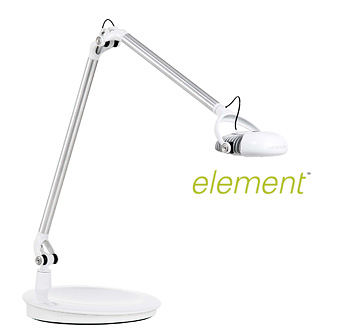
Element LED Light


The future of LED technology. The future of task lighting. a motto for this product. study of a lamp that delivers MCX LED Technology, the Element Offers new LED task light leves of performance, efficiency and sustainability in a task lighting solution.

other than minimal environmental impact, the Elements also designed compact and elegant


Specifications

  • 19 mounting options, including panel mounts for systems furniture
  • Universal power supply and interchangeable plug options for worldwide compatibility on a single SKU
  • Neutral white 3500 K light temperature
  • Maximum reach of 28 inches
  • Maximum height of 28 inches
  • Working height of 18 inches to fit easily under storage bins
  • 135° front-to-back head tilt
  • 90° side-to-side head rotation
  • 360° swivel from base
  • Finish options: White with Silver Accents or All Silver
  • UL/cUL/CE and worldwide certification
  • RoHS compliant
  • Pending Energy Star approval
  • Constructed primarily of recycled aluminum
  • Up to 81% recycled and 99% recyclable content
  • May contribute to a number of LEED-CI, -NC and -EB credits
  • 10-year warranty

Wednesday, June 2, 2010

Since successfully addressing the well publicized issues created by the RoHS and WEEE directives on the restriction of hazardous substances, the connector industry is now facing a new challenge -— Glow Wire. Although the IEC 60335-1 standard is primarily relevant in Europe, North American companies need to comply in order to service their global customers.

IEC 60335-1 was quietly put together in 1998, although its effects have only really become apparent since mid-2006. In the past, the emphasis was on the ability of electrical appliances and components to self-extinguish in accordance with the Underwriter Laboratories (UL) standard in the event of a naked flame. However, damage is now increasingly being caused by devices self-igniting when components malfunction — damage that may occur in particular when appliances are left unattended.

Because IEC 60335-1 describes the “Safety of Household and Similar Electrical Appliances,” it is primarily about protecting end users and has also been adopted as a basic standard by well-known consumer protection organizations, such as the CE mark. Even the CCC mark, established in China, refers to IEC 60335-1.

Looking at the history of the standard, one can understand why there is now some urgency to its adoption. The standard’s origins go back to 1991, but led to lengthy discussions and objections. In fact, it was not passed until 2005. Consequently, during this time, appliance manufacturers were effectively excused from complying with the standard. Now, however, the uncertainty no longer exists, and appliances must conform to the standard and the resulting test procedure, which was defined under IEC 695-2-1.

With regard to connectors and wiring, the standard requires that insulation materials (connector housings, conductor insulation and printed circuit boards) in all circuits carrying more than 0.2 A be able to resist ignition in the event of glow-wire overload. A distinction is made between attended and unattended appliances.

Tuesday, June 1, 2010

Tommy Williams, a former student of De montford University studying Product and furniture Design, s part of the new product. design team at floorcare brand Vax feels that his previous experiance working at the company in 2008 during a summer placement played an important part in his success, and encourages all young design students to seek industrial placements. Vital skills can be learnt and valuable experiences can be won the 2009 EDF Energy Ideal Home Show for his /Micro Kitchen' design. Williams, who works agained giving the competitive edge at university and beyond. he claims that "working at vax gave me a great head start in the world of design." he is now working on a project at Vax to develop a new version of the lightweight multi cyclonic vacuum cleaner called the Mach Air Reach, which is soon to launch.

Monday, May 31, 2010

Optoelectronics specialist Lumex (Palatine, IL, U.S.; www.lumex.com) recently launched the InfoVue High/Low Temp series of custom, high-duty LCD displays for applications that perform in extreme heat or extreme cold. Whereas existing LCD technology performs in the –20° to 70°C temperature range, Lumex says, the InfoVue High/Low Temp displays provide consistent high-quality performance from –40° to 85°C.

“Previously LCDs that operated in extreme cold or extreme heat required bulky built-in heaters and coolers in order to ensure performance,” says Yasoob Ahmed, display technology manager. “The special liquid crystal used in the InfoVue High/Low Temp series eliminates the need for coolers and allows us to use low-power heaters.“ In addition, Ahmed says, custom InfoVue LCD displays can provide a 50% savings in technology costs and 80% energy savings when compared with alternative technologies such as vacuum fluorescents.

InfoVue LCD displays provide full graphic capability and daylight visibility. When combined with LED backlighting technology, a wide range of color options is available. Users can either opt for a monochromatic screen with any color of LED backlight, or select negative image option with mono colored pixels and a black background.

The displays can be produced in sizes ranging from 8 × 1 character displays to 320 × 240-pixel graphic displays.
The latest addition to the R8C family of microcontrollers (MCUs), the R8C/Lx series from Renesas Technology America Inc. (San Jose, CA, U.S.; www.renesas.com) offers engineers a built-in LCD controller and is capable of driving up to 416 LCD segments. According to the company, these features, along with other integrated features such as power-on-reset and on-chip oscillators, create a single-chip solution that reduces bill of material costs and design complexity.

“Electronics in a typical home appliance have to perform three main functions: system control, user interface, and safety/monitoring,” explains Nelson Quintana, product manager, system LSI business unit. “The R8C/Lx MCU integrates functional blocks to handle all three tasks.”

The MCU’s peripheral functions such as A/D, D/A, timers, and serial interfaces can be used in system control. Similarly, specialized hardware features such as detection of oscillator failure, an independent watchdog timer, and protection of system registers provide a self-testing mechanism to achieve a high level of safety and reliability. For the user interface, the MCU can control the most common input devices such as key matrices or knobs, and it can drive an LCD glass to enhance the operation of the appliance.

Quintana says that compared with other design options, an MCU with a built-in LCD controller provides more design flexibility. “Products incorporating an LCD can be typically designed using standard I/Os from any MCUs. This approach, however, has many limitations in the type and/or size of LCD glass that can be controlled, and the design can be complex since it is a software-based approach,” he explains.

A second approach is to use an LCD module that has a dedicated controller, also known as chip-on-glass. “Although this may be the easiest way to add an LCD to a product, it is definitely not the lowest-cost solution because of the addition of an extra chip,” Quintana says. “An MCU with a built-in LCD controller such as the R8C/Lx series provides greater flexibility, because the hardware can be configured for various options, thus reducing the software complexity and eliminating the cost of external components.”

Further adding to the device’s flexibility is the integrated data transfer controller (DTC). “The DTC unit can be configured to move data from any location in memory to any peripherals or vice versa,” Quintana explains. “In addition, the unit can be set to start transfers immediately after an interrupt trigger or with software control.”

In a motor control application for a washing machine, which requires the MCU to continuously monitor motor sensors through multiple A/D inputs, Quintana says the DTC can be configured to automatically transfer the A/D conversion results from the A/D registers to RAM for calculation purposes. “By doing so, the CPU will not be interrupted; hence, reducing the interrupt handling overhead,” he says.

Based on a 16-bit CPU core, the new device also integrates data flash memory with a background operation function that allows the CPU to execute instructions while data are being written to or erased from the data flash. It supports an extended voltage range of 1.8 to 5.5 V to give system designers options for configuring their power supplies, while potentially reducing system cost by eliminating unnecessary components. In addition, high-speed on-chip oscillators eliminate the need for an external resonator by proving precise clock signals at 40, 36.864, or 32 MHz.

In addition to an integrated data transfer controller, data flash, and an onboard 416-pixel LCD controller, the R8C/Lx MCU features hardware for self-testing to facilitate industry standards for safety.

Appliance technology has evolved significantly over the years, and two trends are merging to fuel the next round of appliance evolution — digital motor control and digital sensor processing. Digital Signal Controllers (DSCs) are at the confluence of these trends, and enable digital sensor processing, digital motor control and power factor correction to be implemented on a single chip.

DSCs have hardware accommodation for efficient DSP processing on-chip. While many advanced sensorless algorithms do not require DSP, most benefit from on-chip DSP resources. For example, the highly efficient Field-Oriented Motor Control (FOC) algorithm benefits from a single-cycle MAC, accumulator saturation and other features common to DSPs and DSCs, but not typically found on MCUs.

While the real world is analog, digital techniques have progressively augmented traditional analog design implementations. At the point where the balance is tipped, where the digital approach cannot be effectively matched with analog wizardry, digital control and processing become mainstream tools in the designer’s tool bag.


Digital motor control

Enlarge this picture
Fig. 1.
Fig. 1. Resource utilization for an advanced sensorless FOC algorithm on a 28-pin, 128 KB Flash DSC.
The ongoing trend toward electronic control is driving the venerable commutator out of its DC motor shell, as evidenced by the migration from Brushed to Brushless DC (BLDC) motors. Another disruptive shift was the replacement of Hall Effect sensors with resistor dividers to measure EMF feedback, through the main phase connections, to determine rotor position and velocity.

Now, advanced algorithms such as FOC are considered highly desirable, due to the resulting excellent torque response, improved motor efficiency and lower audible noise obtained through sinusoidal drives. The FOC algorithm asymptotically decouples the rotor torque and rotor flux, making the speed linearly related to torque current. This permits, for example, an induction motor to possess the same behavior of a separately excited DC motor.

All of these motor transformations have one thing in common: they are enabled by progressively more sophisticated electronic control, coupled with an economically viable control solution. The primary impediments delaying these dramatic shifts have been the availability of cost-effective control, and the time needed to understand and refine the technology.

Many underpinnings of those impediments have been removed with modern DSCs, which offer cost-optimized and application-optimized performance coupled with robust applications support. Regulatory add-ons, such as active power factor correction, exacerbate the control workload and accelerate acceptance of the digital solution. As DSCs continue to add capability and performance while prices continue to decrease, new possibilities for product development emerge. This can be illustrated with the example of the merging of digital motor control with digital sensor processing onto one DSC.


Digital sensor processing

Enlarge this picture
Fig. 2.
Fig. 2. Sensor signal plus noise in the time domain.
Today, a sensor signal within a typical motor-driven appliance is filtered, level shifted, amplified and fed to the Analog-to-Digital Converter (ADC) of an embedded controller. The performance of the embedded application depends on accurate information coming from the sensor. Sensors can degrade with use, which may accelerate product failure. Analog-filter and gain characteristics can change over time, temperature and manufacturing variations.

Digital sensor processing can be employed to provide advanced compensation for a variety of sensor conditions, including sensor degradation, performance reductions in age-sensitive or temperature-sensitive components, failure prediction, substituting a less expensive sensor without performance loss, or improving sensor accuracy. Since DSCs are increasingly being used for motor control, they provide an opportunity to utilize excess resources to also handle digital sensor processing tasks. Fig. 1 illustrates the resource utilization for an advanced sensorless FOC algorithm on a 28-pin 128 KB Flash, the dsPIC33F128MC202 DSC. (Note: dsPIC is a registered trademark of Microchip Technology.)

There is richness to sensor data in the frequency domain that is not apparent in the time domain. Sensors are often remote from signal conditioning circuitry, and their signals are subject to environmentally induced noise. A low signal-to-noise ratio can adversely affect the performance of the end application.


Enlarge this picture
Fig. 3. 
Fig. 3. Sensor signal plus noise in the frequency domain.
Take, for example, the thermocouple, which is a common sensor used for measuring temperature. Thermocouples are 2-wire sensing elements that use the Seebeck effect to measure the temperature at the junction of the two wires. The Seebeck effect creates a small voltage across the junction of two dissimilar metals that correlates to the temperature at the junction. Because of low signal amplitude and low current drive, thermocouple signals are highly susceptible to power-line contamination. For slowly moving temperatures, a low pass filter may satisfactorily reject power-line noise.

Digital filters are preferable for filter characteristics requiring adaptation (such as sharp rejection of a 50 Hz signal versus a 60 Hz signal), sharp cutoff frequencies or stability over time, temperature and production variation. For complex filters, the traditional analog filtering approach requires more components, is subject to drift over temperature and aging, and requires component swap-out for filter characteristic changes.

The thermocouple example can be extrapolated to any other sensor with induced noise that degrades application performance. For sensor applications with higher rates of change, the power-line noise may fall within the spectra of the sensor signal. This may best be filtered using a notch digital filter. Fig. 2 indicates a time-domain representation of a signal buried in noise. Fig. 3 illustrates how the desired signal becomes easily discernable in the frequency domain.

Another illustrative example can be found in a different class of sensor processing; one where sensor accuracy or reliability is desirable, but economically challenging. In such cases, two approaches can be taken. One is to use a lower-cost sensor and augment the lost reliability with digital sensor processing. The other is to combine sensor functions to eliminate a sensor. Alternately, it may be possible to do both. Turbidity detection can be used as a platform to illustrate plausible concepts.


Turbidity sensing

Enlarge this picture
Fig. 4.
Fig. 4. DSCs can optimally handle sensor processing and motor control, and may replace the user-interface MCU, depending on architectural preference.
Turbidity detection can be used to detect the level of particulates in dish or laundry water, to determine that the load is clean enough to terminate a wash cycle early. This helps to avoid additional tub fills, which saves machine energy and time. Industrial-grade turbidimeters, used at water treatment plants to assess water quality in the treatment cycle, are very precise and rugged, but are too expensive for appliance use.

Appliance turbidity sensors employ optical techniques, where a beam of light is passed through the liquid being tested. Two optical detectors — one positioned head-on to the light source, the other at an angle of 90 Deg to the light source — measure the transmitted and scattered light photons, respectively. The greater the concentration of suspended particles in the water, the less light gets through and the more it is scattered. The turbidity of the water is determined by analyzing the ratio of the scattered light signal, divided by the transmitted light signal.

Most dishwashers have removed the detector collecting scattered light information to save cost, which has resulted in reduced sensitivity. On the other hand, while this technique measures occlusion to a degree that is satisfactory for dishwasher applications, it may not be sensitive enough for clothes washer applications where the change in turbidity is relatively small. The frequency-domain analysis of transmitted light would not only provide the strength of the collected signal, but also spectral information that may yield sufficient information to enhance sensitivity for washing machines.

By implementing frequency-domain analysis of turbidity information on a DSC, dishwashers may be able to optimize detergent use and reduce rinse cycles by administering proper concentrations of detergent for local water conditions. Digital sensor processing may also be able to distinguish between particulates, normal turbulence, and the presence of detergent by examining frequency domain characteristics. This may permit the detector to have dual uses: both detergent detection and normal turbidity measurement.

An expensive element of turbidity detection is the material through which the liquid passes. Lower-cost material can succumb to abrasion following long-term exposure to particulates in the water flow. This causes reflected light that reduces the sensitivity of measurement. Digital sensor processing may permit lower-priced materials to be employed, by using digital techniques to improve signal selectivity — thus extending sensor life.


Practical considerations

Enlarge this picture
Table 1.
Table 1. Disruptive technology shifts in DC motor control
Appliance engineers do not need to be steeped in DSP technology to take advantage of frequency-domain techniques. Low-cost tools can recommend digital filter types and generate coefficients based on the desired filter parameters. In fact, free, optimized DSP libraries and tools that are available today permit the examination of sensor signals in the frequency domain. DSCs are well-adapted implementation vehicles for this frequency-domain processing, since they have specialized hardware and addressing modes optimized for DSP. Additionally, DSCs incorporate hardware specialized for motor control and power-drive applications, so both sensor processing and motor control can be accomplished with a single chip. Training and vendor support can also accelerate time to market.

The use of DSCs to perform both digital motor control and digital sensor processing presents appliance designers with new opportunities to

Wednesday, May 26, 2010

GlobTek is proud to introduce our NEW family of External Desktop 70W Switchmode Power Supplies. These low profile, ABS enclosed, SMT, Leading Edge, convection cooled designs offer up to 70W of regulated power. Universal input of 90-260 Vac 47-63Hz and outputs ranging from 3V to 48Vdc. All designs are safety agency approved (UL, CSA (cUL), TUV/VDE, CE). These power sources are ideal for Portable Equipment, Communication, Video, Power Tools, Consumer Electronics, Industrial and Medical Equipment. Proven Reliability, VERY Low Cost and modified designs make these power supplies perfect for OEM requirements. International Power Cords are also available.
GlobTek is proud to introduce our NEWLY REDUCED COST family of Open Frame 150W Switchmode Power Supplies. These 199 x 110 x 50 mm, low profile Leading Edge, convection-cooled designs offer up to 150W of regulated power. Designs have Built-In EMI Filter, Soft-Start Circuit, Limiting AC Surge Current, Short Circuit and Overload Protection. Universal selectable input of 85-132/170-264Vac 47-63Hz and outputs of 5,7.5,12, 24 Vdc and multiple up to quad are available (Output Voltage Adjustable). All models have safety agency approvals (UL, cUL, TUV, CE). These power sources are ideal for Tele/Data Communication, Video, Consumer Electronics, Industrial, Medical Equipment or any system requiring power. Attractive Small Size, Proven Reliability.
GlobTek is proud to introduce our family of Cooling Fans. These Low Cost designs are available with lubricated sleeve or ball bearings. Inputs of 3,5,12 or 24 volts for Brushless Dc and 115 or 230 volts for Axial-Tube AC applications. Finger Guards and Filters for the fans are also available. Safety Agency approved. These Cooling Devices are ideal for Portable Equipment, Communication, Video, Power Tools, Consumer Electronics, Industrial and Medical Equipment. Attractive Small Size, Proven Reliability and VERY Low Cost make these Cooling Devices perfect for OEM requirements. International Power Fan Cords are also available. Catalog also available on www.GlobTek.com
GlobTek is proud to announce its newest innovation, our GU series of ATX type switching power supplies & Lead Acid battery combinations! This product allows ATX SPS users to take advantage of our high quality and low cost ATX with the advantage of a disater saving battery backup. This system-saving product fits in all standard PCs and takes the form of standard case sizes for ATX & Micro-ATX type supplies. The battery can easily be fitted in the 5 1/4" drive bay of any PC (Model #s: GUB 2420 / GUB 1244), or fitted inside the chassis of a PC or other types of equipment (GUB 1240 & 1270).

Key Points:
- Support Software monitoring function under UNIX, DOS, Win 98, NT, Netware environment. (optional)
- Remote Control On/Off without AC main power!
-Designed to meet all worldwide regulatory requirements such as: UL, cUL, CE, TUV, T-Mark, etc. Will certify upon request.

GlobTek is proud to introduce our (2) families of External Desktop Medical Switchmode Power Supplies. These designs are available in sleek low profile ABS plastic cases, SMT Leading Edge circuit designs, are convection cooled with regulated voltage outputs. Designs are available in 24W or up to 60W configurations. Universal input of 90-260 Vac 47-63Hz and outputs ranging 12,15,24 & 30Vdc. All designs are APPROVED to UL 2601.1, CSA (cUL 601.1), NEMKO EN60601.1 & CE. Designs were tested to EMC requirements. These power sources are ideal for Portable Equipment, Communication, Video, Power Tools, and Other Electronic Medical Equipment. Attractive Small Size, Proven Reliability, VERY Low Cost makes these power supplies perfect for OEM requirements (Modified Designs are also available). International Medical Power cords are also available.
See Specification , Rating Table & Modular Concept for Desktop Power Supplies
GlobTek Inc. is proud to introduce our new large family, over 200 standard models, single, dual, triple and triple-low, output voltage from: 3.3V to 48V in 0.1V increment, single-platform design. This family of Desktop Style power supplies is housed in Impact Resistant Polycarbonate Enclosure, Thermal Conduction Cooling, Case Dimensions: 5.60L x 3.00W x 1.7H (in), all Models. This Family features: Regulated output with low ripple single/dual/triple up to 100W, Remote Sensing, has Built-in Protection features: O.C./S.C., O.V., Thermal, accepts Universal Input:100-250VAC, meets Safety Agency Requirements: UL60950 and UL2601, and complies with EMI/RFI Regulations, EMC Directives/ CE Compliant for Grounded and Non-Grounded Applications. Power Factor Correction (PFC) is available, standard option, to comply with EN61000-3-2 and EN61000-3-3. Modified and Custom Designs, such as: Constant Current, Battery Chargers, Internal Applications: PCB and Open Frame Mounted are Also Available.

See Specification , Rating Table& Modular Concept for Desktop Power Supplies

For more information please inquire:
Tel 201.784.1000 Fax 201.784.0111
Email: sales@ globtek.com

GlobTek's TR9 - series of Low-Profile External Desktop Switch-Mode Power Supplies integrate SMT Leading Edge circuit designs, are convection cooled with Universal input of 90-260 Vac 47-63Hz and regulated voltage outputs of 7.5, 12, 15, 24, 36, 48VDC. All designs are APPROVED to UL/cUL 1950, CE, TUV-GS, CB, MITI T-MARK, meet or exceed international EMC requirements. These power sources are ideal for Portable Equipment, Communication, Video, Power Tools, and Other Electronic Equipment. Attractive Small Size, Proven Reliability, Modified Designs are also available.
GlobTek is proud to introduce our Medical Power Transformers. These low cost Wall Plug-In & Desktop designs can provide AC output up to 115 W. Standard features: 0-40C Operating Temperature, Short Circuit and Overload Protection, Input Voltage of 115 or 230 Vac 50 or 60 Hz, Output Voltage ranging from 3-30Vac & center tap, ABS plastic enclosed, Listed/Certified or designed to meet UL 2601.1 / CSA (cUL) 22.2 #601.1. These power sources are ideal for medical Portable Equipment, Communication, Video, and Power Tools. Attractive Small Size, Proven Reliability, VERY Low Cost makes these power supplies perfect for OEM requirements. Modified & Custom are also available.

GlobTek is proud to introduce our Linear Medical Adaptors. These low cost Wall Plug-In designs can provide DC output up to 100W(custom, Dual Cord Desktop). Standard features: Within each model, Output may vary from 50mA to max. Load specified, in 50 mA increments, preserving output voltage +/- 5% tolerance. Options for specifying Output Voltage Deviation from standard model add suffix -x.x to model no. See specifications Dielectric Strength: 4000VAC pri-sec; Spacing 8mm pri-sec; Leakage:<0.100mA. Input Voltage of 120 or 220/230/240 VAC 50 or 60 Hz, Output Voltage ranging from 3-48Vdc & multiple Black Polycarbonate UL94V-0 enclosure required to UL 2601-1/ CSA (cUL) 22.2 #601.1 and TUV to EN0601. These power sources are ideal for medical Portable Equipment and other medical applications. Attractive Small Size, Proven Reliability, VERY Low Cost makes these power supplies perfect for OEM requirements. Modified & Custom are also available.

GlobTek Open Frame 200W "High Reliability" Switchmode Power Supplies w/Active PFC. These low profile (178 x 108 x 30 mm) Integral Heatsink, convection-cooled models offer up to 200W of regulated power. Designs have Active PFC (0.98min.), Built-In EMI Filter Class B, Limiting AC Surge Current, Short Circuit / Overload Protection. Universal Wide Range Input of 85-264Vac 47-63Hz with single output units of 3.3-48Vdc and multiple output units up to quad are available.

See: 200W Open-Frame Rating Table and Open-Frame General Specifications

Designed to meet MTBF rating of 150,000+ hours at 50C w/o a fan. All designs are Approved or designed to meet international safety agency approvals (UL, cUL, TUV, CE, CB for ITE #UL60950 or Medical #UL2601-1) and EMC requirements. These power sources are ideal for Tele/Data Communication, Video, Industrial, Medical Equipment or any system requiring power. Attractive Small Size, Proven Reliability & Cost Efficient availability makes these power supplies perfect for OEM requirements. Modified & Custom designs Power Supplies up to 2000W are also available.
GlobTek is introducing our family of Open Frame 288W Switchmode Power Supplies. These low profile (215 x 107 x 60 mm) Leading Edge, convection-cooled, designs offer up to 300W of regulated power. Designs have Active PFC, Built-In EMI Filter, Limiting AC Surge Current, Short Circuit / Overload Protection. Universal Wide Range Input of 85-264Vac 47-63Hz and outputs of 3.3-48Vdc, Vdc and multiple up to quad are available. Designed to meet MTBF rating of up to 150,000+ hours at 50C w/out a fan. All designs are Approved or designed to meet international safety agency approvals (UL, cUL, TUV, CE, CB for ITE #950 or Medical #601.1) and EMC requirements. These power sources are ideal for Tele/Data Communication, Video, Industrial, Medical Equipment or any system requiring power. Attractive Small Size, Proven Reliability & Cost Efficient availability makes these power supplies perfect for OEM requirements. Modified & Custom designs Power Supplies up to 2000W are also available.

GlobTek is introducing our families of External Switchmode Split-Rate Constant Current Sealed Lead Battery Chargers. These designs are available in sleek low profile 94VO Polycarbonate, no vents plastic cases 118 x 60 x 33 mm to 141x76x43mm, SMT Leading Edge circuit designs, are thermal conduction cooled with regulated current, single output. For the first part of the charging period , while the battery is in low state of charge, the current charge will be medium to high charge rate, factory adjustable. When the battery is approaching full charge, the charging current is switched to a very low trickle charge rate. The charger then may be left connected to the battery indefinitely.
Designs are available up to 72W configurations. Universal input of 90-264 Vac 47-63Hz and outputs ranging from 1 cell to 48V battery. All designs are APPROVED to meet UL 2601-1, CSA (cUL22.2 #601.1), TUV EN60601, CE & CB. Designs were tested to EMC
requirements. These battery chargers are ideal for Portable Equipment, Communication, Video, Power Tools, and Other Electronic Medical & ITE Equipment. Attractive Small Size, Proven Reliability, Cost efficiency makes these power supplies perfect for OEM requirements (Modified designs & for use with ITE 60950 equipment are also available). International Power Cords are also available.

GlobTek is introducing our families of External Switchmode Split-Rate Constant Current Sealed Lead Battery Chargers. These designs are available in sleek low profile 94VO Polycarbonate, no vents plastic cases 118 x 60 x 33 mm to 141x76x43mm, SMT Leading Edge circuit designs, are thermal conduction cooled with regulated current, single output. For the first part of the charging period , while the battery is in low state of charge, the current charge will be medium to high charge rate, factory adjustable. When the battery is approaching full charge, the charging current is switched to a very low trickle charge rate. The charger then may be left connected to the battery indefinitely.

Designs are available up to 72W configurations. Universal input of 90-264 Vac 47-63Hz and outputs ranging from 1 cell to 48V battery. All designs are APPROVED to meet UL 2601-1, CSA (cUL22.2 #601.1), TUV EN60601, CE & CB. Designs were tested to EMC
requirements. These battery chargers are ideal for Portable Equipment, Communication, Video, Power Tools, and Other Electronic Medical & ITE Equipment. Attractive Small Size, Proven Reliability, Cost efficiency makes these power supplies perfect for OEM requirements (Modified designs & for use with ITE 60950 equipment are also available). International Power Cords are also available.

GlobTek Inc. is introducing new large family, over 200 standard models, single, dual, triple and triple-low, output voltage from: 3.3V to 48V in 0.1V increment, single-platform design. This high efficiency, 85% typ., family of Open-Frame/ PCB Mount Style power supplies, size: 5.15L x 2.75W x 1.50H (in) has integral multi-fold heatsink natural convection cooling. The Triple-Low Model shown: +3.3V/3A, +5V/3A, +12V/6A accepts Universal Input: 90-264 VAC or 36-72 VDC, features regulated outputs with low ripple, has Class B EMI Filter and P.F. Correction; also Built-in Protection features: O.C./S.C., O.V., O.T., meets Safety Agency Requirements: UL60950 and UL2601, CE Compliant for Grounded and Non-Grounded Applications. Modified and Custom Designs, such as: Constant Current, Battery Chargers and other Internal Applications are also available.